Love can be a real mess sometimes.
There are acceptable and unacceptable types of love, ways to love, people to love. And when you fall in love with someone who is “bad” for you, the obstacles (self imposed, enforced by our society, or otherwise) will begin to pile up. Things labeled bad run the gamut: from legitimately bad situations, involving abuse and unhealthy, dangerous dynamics; to falling for someone of the same gender or a different race (depending on where and when you’re existing, up till and including right now sometimes); falling for someone married, or being married yourself, or in some other way breaking up a monogamous pair; and the mind bending complications of how your combined mental health issues will interface. Even falling in love outside your class or culture can be considered unwise by some, and cause a lot of emotional stress. Obstacles. Troubles. Uncertainty. Sometimes tragedy. It would be nice if love, such a celebrated and joyous experience (some of the time) could be a purely wonderful trip. But we all know that where there is light, so too shall there be darkness, and the pain and tumult of love is sometimes what ultimately makes it so sweet. And sometimes, when something is illicit, it becomes irresistible. I’ve watched a handful of movies over the past few months that made me think on bad romance, the different ways it presents, the different types of bad romance at different eras in society, and how people choose to handle their bad romances. Blow up the world to be together, walk away, or take some other side trail in and out of those woods. People (me) love bad romance, it’s endlessly compelling. Let’s get into it.
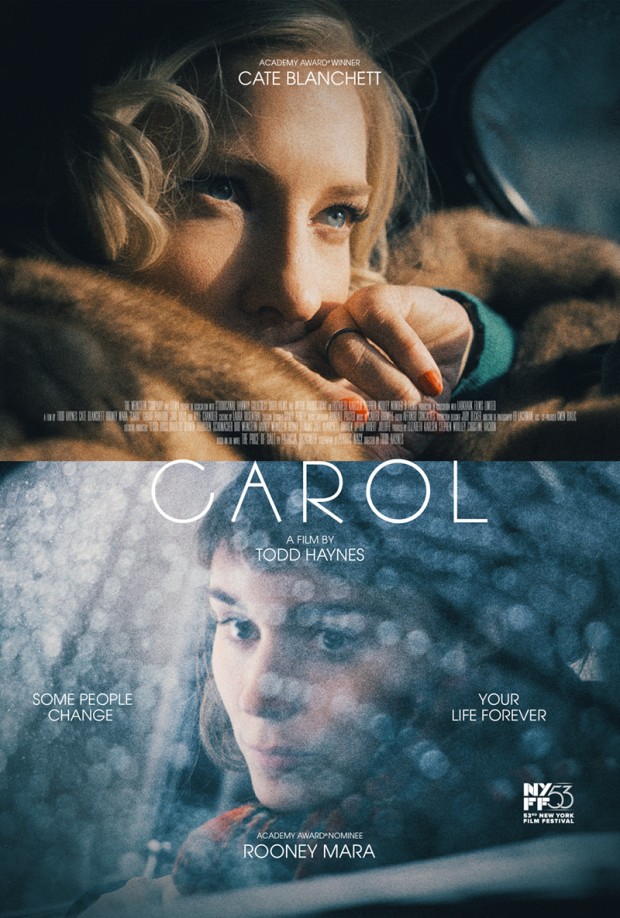
Carol is a 2015 drama based on the 1952 Patricia Highsmith novel The Price of Salt. It is directed by Todd Haynes, and stars Cate Blanchett and Rooney Mara. This is a beautiful movie, based on a beautiful and complicated novel. Carol (Blanchett) is a wealthy woman, mother to a young daughter, and separated from her husband. Therese (Mara) is a young photographer, engaged to an adorable man (Jake Lacy), working in a department store in Manhattan. The two women meet, and are drawn to one another. Carol pursues Therese. As they come together, Carol’s marriage dissolves. It is clear that Carol has had many relationships with women throughout her marriage. Her husband is devastated by this and begins to build a legal case against Carol to get custody of their daughter when they divorce. In 1950’s New York her involvement with women (infidelity compounded by homosexuality which was illegal. ILLEGAL!) would be an open and shut case. He hires a private detective of sorts, who trails Carol and Therese and takes photos of them straight up making love. Carol is in turn shattered by her husbands actions. Ultimately Carol decides to give up her legal rights to her daughter, so that she can live her life, and love who she loves.
Both Carol and Therese are strong, solitary, and mysterious women. They clearly keep their own counsel, and aren’t shy about living life in big gulps. I loved that about them. Therese is not terribly excited about marrying her fiance, or being his partner in the traditional sense, though she does seem to love him. She wants to explore the world, is passionate about art, and seems to be comfortable taking risks. She is an extremely compelling young person. I admire her entire vibe. Carol is a more complicated and weighted character. She has had a lifetime of living split into different people. She has to preform as a wealthy wife and mother, and it’s clear she’s reached a breaking point. She is a woman in pain, who can no longer carry on with the status quo. She has a lot to loose. A married woman, with money, and a child does not float through life the way Therese, young and mostly unattached and poor, also of a different generation, can. Carol is needy in a way Therese is not. But Carol is also very strong, and is a fierce enigma in her own right. Carol’s life has been filled with intensity and stress, and she seems to simmer in that stew with a mix of exhaustion and glee. Her troubles define her. Therese is not burdened with any real definition. The attraction between them is fire. Profound romance. Heart stopping romance. Destructive romance. Big gorgeous romance.
Coming Home is a 1978 romantic war drama directed by Hal Ashby, staring Jane Fonda, Jon Voight (looking hot af) and Bruce Dern. Jane Fonda stars as Sally, who is a young conservative military wife to Bruce Dern, a captain in the Marines who is about to go to Vietnam. After he deploys Sally gets housing off base, and though uncertain at first, finds her footing a she navigates life without her husband. She begins volunteering at a local VA hospital, full of recently returned Vietnam vets. It is here that she finds her old high school classmate Luke (Jon Voight) who is a paraplegic due to injuries he sustained in Vietnam. Luke is angry, he is in a wheelchair, and he is hot. I’d never seen Jon Voight young before and let me tell you, it was a revelation. Luke looks like a guy I would have chased around in 1998. For sure. Sally and Luke have a rocky start, but as time goes on they begin to come together, and soon fall in love. Meanwhile Sally’s husband is in the shit, and during a brief leave, where Sally goes and visits him, he clearly is suffering from ptsd. He is a changed man. And she is a changed woman, after making some serious love with Luke. Very steamy. Sally and Luke continue their affair, having the time of their lives, frankly, but knowing that when Sally’s husband returns she will return to him. And he does eventually come back, after accidentally (?) shooting himself, and quick as can be finds out about Luke (since the two of them were making out all over town, literally) and he looses his shit. Rightfully so. I mean he’s been through an ordeal, he’s burnt out, he’s hallowed out and now this?! Too much. All hell breaks loose. And ultimately things go from bad to tragic.
The transformation and fall of Sally’s husband is really hard to bear. He begins the movie a handsome, powerful man, with a wife, and a high ranking military position. What he sees and experiences in the war deeply traumatizes him. And when he returns things are a mess. He’s not a hero, he’s left in shame. His wife is a transformed woman, and she’s banging the hottest paraplegic in the state, a man who opposes the war, openly and wholeheartedly. It’s just a mess. I found his journey very moving. Sally is hard to dislike, despite her betrayal. She falls hard for Luke, and sort of just goes for it. A deeply human tale. Very relatable. She and her husband move in opposite directions. Her path is one of joy, and orgasms, and slight unease around her husband. His journey is one of extreme trauma, betrayal, and a complete collapse of self. And Luke is rebuilding his life after returning home disabled. His relationship with Sally seems to heal him, and to heal her too. It does not heal Sally’s husband though, tell you what. The movie shows many broken men. It is a deeply antiwar movie. It is a fascinating and moving movie. Excellent.
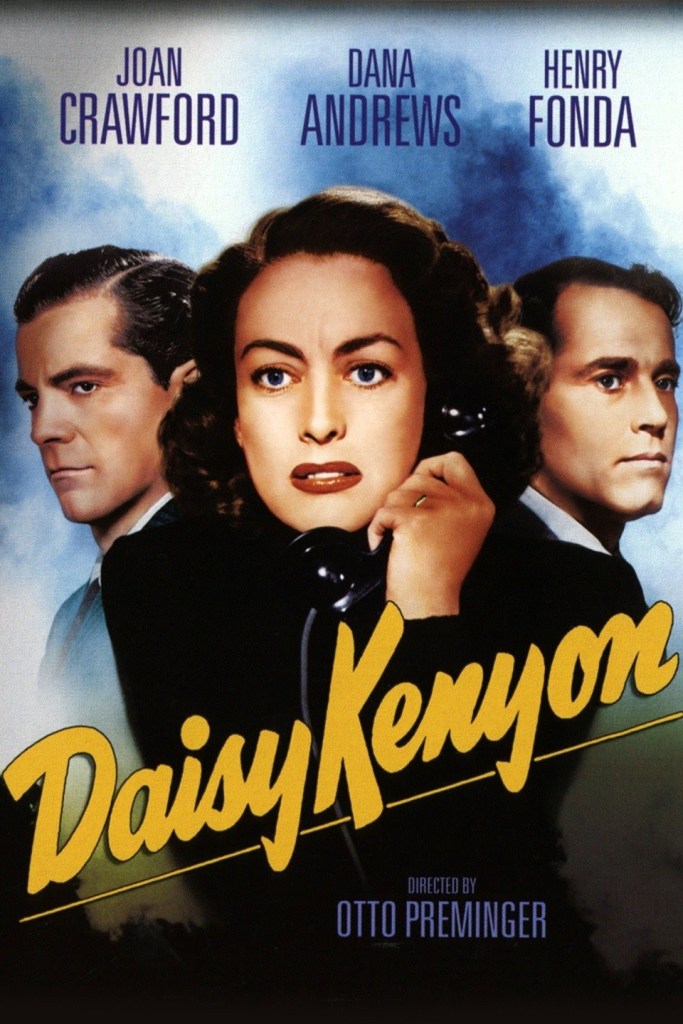
Daisy Kenyon is a 1947 noir style drama directed by Otto Preminger, and staring Joan Crawford (all hail the Queen), Henry Fonda, and Dana Andrews. Love triangles feature heavily in the bad romance theme, and this movie has got a doozy. Joan Crawford stars as Daisy, a modestly successful commercial artist living in New York. She has her own apartment, and though past 30, is unmarried. She is having an affair with a wealthy married man, Dan (Dana Andrews). After being stood up by her lover Dan, Daisy meets and decides to go on a date with a widowed WWII vet (Henry Fonda, cutie). We also meet Dan’s wife, and two daughters (more on them later). Daisy tells Dan she is dating Peter (Henry Fonda, the war vet) and Dan goes nuts. Daisy is like, listen, I’ve been hangin onto your lies for years. You’re not leaving your wife. I’m going to build a life with Peter. Sure Peter is weird, and kind of scary in a vacant needy way, but gosh darn it I’m ready to be in a real relationship. And then Bam she marries Peter. Like so fast. Peter is just craZy in love with Daisy. Emphasis on crazy. (sidenote: it’s hard to tell sometimes, in older movies, if people are being insane or if this is just how people acted. For instance Dan, the rich married guy, acts like an ass the entire movie. Selfish, misogynistic, controlling, violent, patronizing to his wife and to Daisy. He assaults Daisy even. Meanwhile Peter is so weird, declaring his love for Daisy the second they meet, wanting to get married, acting both intense yet detached. I think Dan truly is an ass and Peter is supposed to be shell-shocked and grief stricken. But I’m not sure if that’s the right read. Daisy is just a friggen mystery.) Then Dan assaults Daisy. And then he decides to divorce his wife (who is a real maligned character, shown smacking her daughter across the face and being bitchy, but she’s also been married to that nightmare Dan, who is openly cheating on her, so. Tough role.) And at this point the movie gets kind of nuts. Dan inserts himself into Daisy and Peter’s marriage. Dan and Peter spend a weird amount of time together, and seem to be united at one point, asking Daisy to choose between them. This nonsense sends Daisy fleeing into the country, where she drives like a lunatic and crashes her car on some extremely snowy roads. I bet snow tires were trash in the 40s. Then she walks miles in the snow back to her hideaway and who is waiting, ol Dan and Peter. She makes her choice, and the reasoning is a mystery to me.
There is a lot that stands out in this movie. Joan Crawford is beautiful and charismatic, and her performance is powerful. The character of an older single woman, choosing between two men, two men that are fighting over her (kind of) is pretty great. Both the men seem troubling to me, it’s hard to choose a team, though the rich married guy is just awful, so go with ol’ Peter, who might be a psychopath but seems fairly gentle, I guess. But Daisy seems way more in love with Dan. For some reason. Bad Romance at it’s best. Drama is the name of the game here, and Joan Crawford is the queen. I’m not sure I understand everyone’s motivations in this thing, but it still works. Highly recommend.
The Bridges of Madison County is a 1995 romance produced, directed and staring Clint Eatwood and based on the novel of the same name by Robert James Waller. It stars Meryl Streep and Clint Eastwood. When this movie came out in ’95 I was 14. Somehow I never saw this film, despite it being a runaway success. It’s a very adult film, and I’m glad I watched it for the first time at 40.
The film opens with the adult children of Francesca (Streep) returning to the farm after their mother’s death and finding love notes/a diary/Francesca’s will which has a mysterious request regarding her final resting place. But quickly we jump to the meat of the story, which is set in 1965 on the farm in Iowa where Francesca, who is Italian and a war bride, is middle aged-ish and her family (husband and two children) leave town to go to some fair. They’ll be gone a full week. This is an unusual situation for Francesca who normally cares for her family full time. Not long after they leave a dusty pick-up rolls into Francesca’s driveway and out steps Clint Eastwood, who is ancient even in 1995. Eastwood plays Robert Kincaid, a photographer taking pictures of covered bridges in the area. He’s old but hot. Or cool, I guess. He’s a really cool guy. Streep, as usual, is completely transformed as Francesca. I was blown away by this performance. Truly. Do I say that every time I talk about her? Yeah, but she was a completely different person in every way, there was nothing of Meryl there on the screen, it was all Francesca. So these two fall for each other. And it is deeply romantic, and beautiful, and lush, and great. Francesca is such a sexually charged character. Again, Streep just went for it. So they have the sexiest week ever. And then her family comes back. And ostensibly things go back to normal. But few can love that deeply without being changed. This movie is so damn romantic. It’s like a 12 layer romance cake. What’s hotter than secret illicit love. A secret kept for a lifetime. So glad I finally watched this. It made me love Meryl even more, it made me feel awash in feelings, and finally I get it. I get what this movies’ buzz was about. It’s damn good.
 Thibeautown