It has been a very full year. While 2020 & 21 were years of stripping things down, and turning in, this past year has been a long much needed replenishment. I got back out in the world, and I started to build again. This year my cleaning business has grown and matured in really fulfilling ways, my friendships have deepened, I got out into the woods, and I traveled again. I got on a plane, went to San Fransisco, and then a road trip up into northern California. I stayed out on MDI and hiked up waterfalls. I got out there, man. I had the privilege of seeing David Sedaris, Marc Maron, & Bob Marley perform, and saw the Portland Symphony Orchestra doing both Star Wars and Christmas music. I was out in the crowds. I got back to The Common Ground Fair and Maine International Film Festival. It was busy, and bustling, and felt great after a few years of turning in. I am grateful, as always, for my friends, my sobriety, my health, books, and my community. I am excited to see that what I’m building now is different, new, sleek, and looks like something that can move. I lost a few friends this year, a real reminder that our time here is both brief and largely what we make of it. What can be a season of struggle for some is a fatal encounter for others. The fact that those we love can die still shocks me.
The last two years I read more than normal, but this year the pendulum swung back and I read less than I have in awhile: 36 books. I can’t see any major themes in what I read, it’s an interesting and disjointed collection of titles. One thing I do observe is that my life out in the big world steered my book choices many times. I read Power of the Dog after hearing about the series (though I’ve yet to watch it, I was so stunned by the book I can’t risk it yet.) A documentary led to me picking up The Heart is Deceitful Above all Things. I read the Maupin (and watched The Night Listener) because of my trip to San Fransisco. My podcast and movie choices also rambled around. I think I was a bit saltier than normal when it came to how things hit me, but I am embracing that for the year. Sometimes things that rub you the wrong way are as interesting or valuable as those that are your jam. There are plenty of good books to discuss though, so let’s get into it.
Fiction
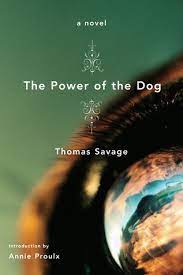
1.The Power of the Dog, Thomas Savage, 1967
So I technically heard about this book from an NPR interview with Benedict Cumberbatch. He read the novel in preparation for his role in the Netflix Series. I think he referred to it as the great forgotten western novel (or maybe Annie Prouxl said that…) I haven’t gotten around to watching the series yet, as I was so moved by the book it’s become a bit of a sacred text. The novel takes place in 1925 and tells the story of two brothers who operate a family cattle ranch together. The younger brother, George, marries, and brings his new wife and and her son to the ranch. Enter: extreme tension. Phil, the elder brother, is an amazingly wrought character. He is an aggressively competent and singular person, who feels the need to dominate every interaction, situation, and person he encounters in his very controlled world. He is sadistic, and he is deeply insecure, and the loss of control he feels at the changes in his family structure brought on by this marriage cause him to loose his mind. The complex dynamic between the two brothers really digs into masculinity in a surprisingly astute and deep way, especially given that this is a western novel, written almost 60 years ago. Their relationship is a snake nest, and Phil’s maniacal obsession with these power dynamics is lunacy. He is a person driven over the edge. The writing is deep and crystalline, in a breathtaking way. The detail in which Thomas Savage shows how dark, twisted, and diseased Phil’s feelings toward his brother, and his father, and his new nephew, and himself are is powerful and nuanced. It’s that attention to detail, that for me, really elevated this book to something remarkable. The tension at the end of the book is almost unbearable. And then, well, it takes a sharp turn, an unexpected turn, and a truly beautiful turn. It’s a stunner of a book, I can’t stop thinking about it.
2. Young Mungo, Douglas Stuart, 2022
Douglas Stewart is a young Glasgow born author and this is his second novel. Apparently he is also a fashion designer, which is interesting. This novel tells the tale of doomed lovers Mungo and James. One Protestant, the other Catholic, kids growing up in the violent and impoverished world of Glasgow, Scotland’s public housing. When I say violent, I mean ultra violent. Hard to bear violent. It is a look into a world I didn’t even know existed. That is what I loved most about this book, it’s a story I’d never heard before, truly, something new (I felt the same about There There in 2018). A truly terrible series of events fall down on young sweet Mungo, most of which comes through the channels his deeply chaotic family have dug. Mungo has a mother (my favorite character, a true wretch of a woman, she is a heart breaker and captures with clarifying honesty what I’ve known of people who are more often underneath their addictions than above them), an older brother who is a straight monster, and a sister who breaks your heart in such an ordinary way, the way so many we love let us down. This book also reminds me of A Little Life, in that I recommend it, but must state it is heavy like a stone on your chest, and best tackled when you’re not too weighted down by your own woes. It’s a heart-breaker.
3. Killing Commendatore, Haruki Murakami, 2017
God I loved reading this book. Like so many Murakami books I can remember the time I spent with this book; adrift in a beautiful and spooky other-world. This book is serene and gentle in big solid whacks. There is a story, it is not without boundaries, things happen, it moves and builds, but Murakami fills in this world with big, soft, descriptive, day-to-day details, and I honestly can’t get enough of it. It can be a terrible bore in the hands of another author to hear about cooking, light housekeeping, errands, and quiet moments of stillness and contemplation, but in the hands of Murakami it’s like beauty enfolding beauty. The man can write. Our main protagonist is an artist, who’s wife leaves him, and he moves to a secluded house in the country to paint. He ends up meeting a rich, weird, enigmatic tycoon, who commissions a painting, and from here the the plot gets thick. The story unfolds in bits and pieces, with many meanderings, and moving parts. It’s rich, textured, interesting. I love Haruki Murakami. I love his style, I love how weird he is, and how good. This is now probably my third favorite of his, after Kafka on the Shore and 1Q84. But don’t hold me to that.
4. The Collector, John Fowles, 1963
The Collector is a psychological thriller by English author John Fowles. Its plot follows a lonely, psychotic young man who kidnaps a female art student in London and holds her captive in the cellar of his rural farmhouse. This book, much like The Talented Mr. Ripley, sets the standard for books of this kind. It is pitch perfect. A crime novel done absolutely right. Both the kidnapper and the kidnapped experiences are told (in alternating narrations) with finely honed elegance. These are not uncomplicated people, either one, and their ideas about themselves, truth, and what is happening between them are two different stories entirely. The structure here is, again, perfect.
5. Cat’s Eye, Margarete Atwood, 1988
Another surprising novel from Atwood. You really never know what you’re going to get with her, she can write a lot of different kinds of books. Cat’s Eye tells the story of an artist (another painter, like our Murakami), Elaine, who is traveling to her old stomping grounds for a retrospective of her work. In doing so she reflects back on her childhood, her family, and her relationship with a group of girls, and one girl in particular, Cordelia (great name). This book is haunted by Cordelia. I love the weight of her early relationships with other girls, how deeply it colors her life, how central it is to who she is, who she becomes. It centers women, and women’s journeys. There is a nasty, dark, stickiness to adolescent girl shit. It’s a dark hole to peer down, and she goes deep, remembering with great clarity a particularly bad stretch of time with these girls, when she was tortured, yet unable to disengage. But this is a much more nuanced story than just a coming of age tale. Elaine is in a later part of her life, she is a successful artist, she has had lovers, husbands, children, and now she is looking back from that shore on those dark hallways of childhood. Elaine was a kid in the 1940s, in Toronto, so all of her childhood stuff is set in a time and place unfamiliar to me, which I loved. That aspect was really interesting, her family was also really interesting. Elaine as a character is a bit of an enigma, honestly. Which is maybe an odd thing for a main character to be, but it works. This is a good book, and an interesting book, a book that explores self; how we build our self, how we tear down our self, and how we become.
6. Fierce Little Thing: A Novel, Miranda Beverly-Whittemore, 2021
A group of friends, who all grew on a commune turned cult in rural Maine, reunite when they receive mysterious letters alluding to a catastrophic secret they all share. In 2004 I wrote a terrible novella about three friends receiving mysterious letters in the mail that bring them all together around a dark secret from the past. It stunk. But this one is great. A taut, well crafted mystery, as cool and dark as the depths of a Maine lake.
7. Home & 8. God Help The Child, Toni Morrison, 2012 & 2015
I don’t normally list books together, but I read these two slim novels back to back and I can’t really separate them in my mind, even though they are very different. God Help the Child is what I consider to be a more classic Morrison story, centered on a woman and her relationship with her mother(mainly). Then Home, the story of a young man grappling with the new trauma of his time in the Korean war and his old and ongoing trauma of being a black human in this country. Both excellent and moving little books.
9. Night of the Living Rez, Morgan Talty, 2022
This is such a phenomenal short story collection, set in a sort of fictional Indian Island (a reservation on an little island in the Penobscot River in Northern Maine.) I recognized so much here, in the people and places. This book is so Maine, so poverty, so addiction, so weather, so true, so current, so important, and so damn good.
10. In the Dream House, Carmen Maria Merchado, 2019 memoir
It’s unusual for a memoir to show up in fiction, but this is an unusual memoir. The story of an abusive relationship, seen through an ever spinning prism of frameworks. It’s really raw, and innovative and beautifully done.
11. My Sister the Serial Killer, Oyinkan Braithwaite, 2018
12. French Braid: A Novel, Anne Tyler, 2022
Another great, lush novel by the criminally overlooked Anne Tyler.
13. The Bottle Factory Outing, Beryl Bainbridge, 1974
Really fun, and funny, and odd. Good beach read.
14. The Plague of Doves, Louise Erdrich, 2008
15. Stern Men, Elizabeth Gilbert, 2000
This is not a popular novel of Gilbert’s but I really loved it. Fun.
16. Billy Summers, Stephen King, 2021
17. Tales of the City, Armistead Maupin, 1978
Had I been reading this as it was originally published, as a weekly episodic in a newspaper (remember those?) in the 70s in San Fransisco I would have really dug this. I don’t think it held together for me as a novel, somehow, but it was fun and specific. I’d call it a romp.
18. Five Tuesdays in Winter, Lily King, 2021
19. Heaven’s Prisoner & 20. Black Cherry Blues, James Lee Burke, 1988 & 1989
21. Gwendy’s Final Task, Stephen King and Richard Chizmar, 2022
So…who wrote this? Cause I call foul here. I really liked Gwendy’s Button Box, the first in what is now a trilogy. Which was also supposedly written by both these authors (although I read on the internet that Steve wrote it, left it unfinished, and somehow Chizmar finished it. Then Chizmar wrote a second book by himself, Gwendy’s Magic Feather (have not read and won’t) This is unverified but rings true to my ear.) I think the credit to King was for the initial idea, and maybe he did a pass on the draft of this third one, but I don’t believe he really had much to do with this. It’s just not that good, and I don’t see his hand in it. At one point they reference shopping in “all three of Portland’s giant malls.” So. No one from Maine would write that sentence. And the entire premise is dumb. It’s heavy handed, and clunky, and has zero depth.
22. A Long and Happy Life, Reynolds Price, 1962
I might have liked this when I was 15, or even 20. But it didn’t really work for me, I didn’t buy it.
23. Ripley Under Ground, Patricia Highsmith, 1970
Disappointing.
24. The Heart is Deceitful Above All Things: Stories, J. T. LeRoy,2001
So I read this after seeing Author: The J. T. LeRoy Story, a documentary on Netflix. It’s a very compelling watch, and I recommend it. But it turns this book into a stupid nest of LIES, a self conscious and performative mess. Great novel title though. Like really great.
25. The Tropic of Cancer, Henry Miller, 1934
This just felt like smut written by an insufferable and underdeveloped little misogynist blowhard. Hated it. I know this was a banned book and I’m not saying it should be. It’s fine that it exists, it’s just bad.
Non-Fiction
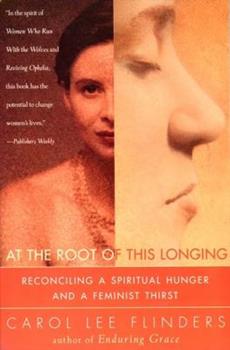
1.At the Root of this Longing: Reconciling a Spiritual Hunger and a Feminist Thirst, Carol Lee Flinders, 1998
Sidenote: many of my nonfiction books this year have the absolute longest titles. I prefer brevity in a title, but I guess it’s kinda punk rock.
Two topics that make many people’s skin crawl: spirituality and feminism, broken down and compared and contrasted like a thesis paper, is what tops my year for nonfiction. She really unpacks that shit, in the parlance of our times. This was exactly the book I needed last winter when I read it. I truly loved it. So well written, blending so many different aspects of the author’s experience, expertise, and research. It’s a packed, dense text that I will certainly read again.
“Flinders identifies the four key points at which the paths of spirituality and feminism seem to collide—vowing silence vs. finding voice, relinquishing ego vs. establishing ‘self’, resisting desire vs. reclaiming the body, and enclosure vs. freedom—and sets out to discover not only the sources of these conflicts, but how they can be reconciled. With a sense of urgency brought on by events in her own life, Flinders deals with the alienation that women have experienced not only from themselves and each other, but from the sacred. She finds inspiration in the story of fourteenth-century mystic Julian of Norwich and her direct experience of God, in India’s legendary Draupadi, who would not allow a brutal physical assault to damage her sense of personal power, as well as in Flinders’s own experiences as a meditation teacher and practitioner. Flinders reveals that spirituality and feminism are not mutually exclusive at all but very much require one another.” -from a review in Harper Academic
2. Dark Nights of the Soul: A Guide to Finding Your Way Through Life’s Ordeals, Thomas Moore, 2004
For you long time readers, Thomas Moore will be a familiar name. A former monk, psychotherapist, and author, he’s a modern spiritual leader of sorts. I’ve read and connected with many of his books. I can’t say specifically what draws me to him, but something about his language, tone, and angle allows me to lock in and ride deep grooves. It just connects. This book was about grief, depression, and darkness. Again, it was just exactly what I needed.
3. Chasing the Scream: The First and Last Days of the War on Drugs, Johann Hari, 2015
A really thorough and astute take down of the so called war on and criminalization of drug addiction in this country (and others). This synthesizes beautifully a lot of information that I’ve bumped up against in reading about addiction for the last 20 years. It is very effective in how it presents information, data, first hand accounts, and history. He puts it all down on the table and shows that this system is not, and has not ever, worked. I hope that policy will begin to move away from for profit prisons and towards humanization of all people, including addicts. It was a very fascinating and clarifying read, he clearly put in the time and research to speak to this complicated issue fully.
4. When We Were the Kennedys: A Memoir from Mexico, Maine, Monica Wood, 2012
Great memoir. I’ve had an obsession with the Rumford, Maine area for the last 5 years or so. I travel through and stop in there when hiking often, and I am charmed and drawn in by the whole thing. The mill. The downtown. The history. The Hotel Harris. Just all of it. This is a really wonderful tale of growing up in that place back in the 1960s. See also Milltown: Reckoning with What Remains from last year’s blog for more Rumford area content.
5. The Foremost Good Fortune, Susan Conley, 2011
A memoir written by Susan about the time she and her young children moved to China, so that her husband could take a job. And she struggled, and didn’t love it. Basically. She also gets diagnosed with cancer while living there. And that takes over the narrative largely. This didn’t really work for me overall, although the story was well told. I don’t have children, I’d likely never stay in a place that seemingly made me so unhappy for the sake of a romantic relationship. So I didn’t like or relate to this character very much. But it’s a compelling and well written book nonetheless. With such good writing skills this was more of a, why this time in your life, why this story?
6. Illumination and Night Glare: The Unfinished Autobiography of Carson McCullers, Carson McCullers, Carlos Dews, 2001
Not a lot of meat on that bone. Skip this unless you’re a real McCullers head.
7. Strange Bedfellows: Adventures in the Science, History, and Surprising Secrets of STDs, Ina Park, 2021
This was a recommend from a favorite podcast, This Podcast will Kill You. Each episode tackles the history, biology, and current events of a specific diseases (Rabies is a fun episode, as is Lyme and Endometriosis). Love it, highly recommend. They had this author on and it was a great interview. But I did find this book fairly boring.
8. The Use of Self, F. M. Alexander, 1932
I don’t even know what this is exactly. It’s hard to read, the language is flowery and archaic. This guy basically fixed a vocal problem he was having by meticulously controlling his posture. Kind of. But he very simply will not go into any kind of practical detail about what he did, really. So it’s a real nothing burger of a book.


Thank you for the fantastic suggestions. I loved the Murakami novel as well.
LikeLike
Pingback: 2023 Book Blog | Thibeautown
Pingback: 2024 Book Blog | Thibeautown