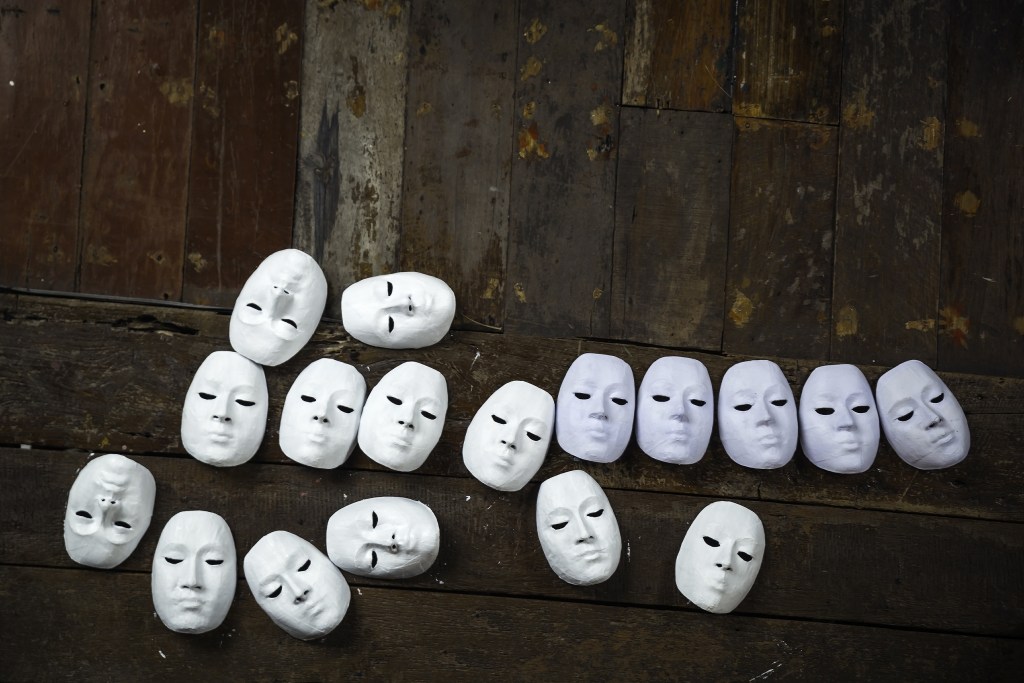
Today is my 45th birthday and I’ve been thinking about identity. How do we answer the question, who are you? What words do we hang the structure of ourselves on? How do we self identify. Not who we are exactly, but how we think of ourselves, how we want to be seen, what we value in ourselves, or feel is most important. Exploring the ways people self identify has been interesting. I’ve asked a handful of friends what five words they would use to describe themselves, and the range of answers has been wild and instructive. Common categories: race, gender, sexual orientation, membership in certain communities, ethnic backgrounds, work, roles in the family or community, or broader roles, passions, hobbies, physical appearance, age, region they grew up or live in. I was surprised and delighted in all the ways those closest to me think of themselves. Language is always imprecise. Five words would never capture a person. Five hundred words could not capture a person. This is about exploring how we see ourselves, what we value in ourselves and how we want to be seen, and I thank all my friends who participated in my research for this essay!
Today the most important aspect of my identity is Human Being. It is always where I start with myself, and with other people. This is something, a shift, that I intentionally experimented with in my early 30s. But over time it has become a natural expression of how I identify. It is the rock on which I stand in any moment, the place from which I start the journey, the place my feet touch the ground. And I try to bring it to my interactions with other people, stepping back in my mind, pausing, and noting: I am a human being, interacting with another human being. I try not to overlay anything on top of that for as long as possible. An interesting result of grounding in this way is you can clock when other people are not treating you as a fellow human being. You can watch them build hierarchies and then protect them, often aggressively, as if they are real. You can see them become angry when you refuse to reinforce their belief of supremacy, see them turn your refusal to be diminished into a transgression on your part. If you don’t play the role expected of you it can go sideways in the blink of an eye. Human being, for me, is a really useful place to start. And when someone tries to diminish me, to “put me in my place”, I can view it as a human being tussling within the false scaffolding of a make believe societal lie. They fear a free fall. If they aren’t rich, beautiful, important, or powerful, then what are they? I’d offer – a Human Being, but they might not experience existence and self-awareness as a tremendous stroke of luck and privilege, instead feeling downgraded, no longer powerful or special.
The second foundation of my identity is Artist. I always wanted to be an artist, from as far back as I can remember, and at some point I decided I was one, and miraculously it turned out to be true. I’m a writer. I love literature. Art is the center of my life, it is the center of my heart and my spirit. My pleasure and delight each day comes from art; reading, writing, creating, interacting with paintings, drawings, sculpture, and books. Art is the reason I get up, it is what propels me forward, it is why I keep going when it is so hard. I find art in everything. Art and nature (another huge source of pleasure for me) are intrinsically linked in my life. I experience art in nature everyday. Being an artist is a way of life, and it is a privilege to live this life. I am most proud and passionate about being an artist. I feel most at home around other artists, and people who center art. In all my moments of uncertainty and despair, I try to move towards art. When I feel like I am a stranger to myself I make the choice to move closer to art, in whatever blind groping way I can manage. I believe it is what I am here to do, and what I am here to bear witness to.
Beyond the difficulty of communicating oneself, there is the supreme difficulty of being oneself. This soul, or life within us, by no means agrees with the life outside us. – Virginia Woolf
For me those two words are what I circle back to over and over. The bedrock, the words I’d etch on my tombstone, before my name or date of birth. I truly believe it’s who I am, now, today. It is not who I’ve always been. That’s the thing about identity, it changes, shifts, is always in flux. As strongly as I feel about myself being a human being and an artist today, I could easily answer that question differently at 50, or 70. And I know I answered that question differently in the past. Had you asked me at 12 who I was I would have sat, silent, on the verge of tears and said nothing. I didn’t know who I was, and it felt like a deep suffering, a wound; I was lost. I feared that who I was, at my core, was disgusting. Discovering myself, creating myself, and experimenting with my identity was an important part of my journey to adulthood, to selfhood.
There was a time in my life when I would have told you I was a drug addict, and that identity blotted out the sky, it was all I was. Being an addict had taken everything else from me, stripped me to an endless need, which drove me day and night, churning my life into pulp, reducing me, imprisoning me, erasing me. And there was a time when my identity was tied to being desirable; it was the thing about me most people commented on, seemed interested in, wanted to posses. I was told it was very important, and I believed it for a time. Identity is not something we create in isolation. Some labels settle into us because they are oft repeated by people whose opinions carry authority. Some labels meant to shame and diminish us can be reclaimed, becoming things we choose rather than accusations we endure. Yet even self-authorship has prerequisite. The freedom to examine your own identity, to reject inherited labels, or to reclaim those meant to diminish you depends on having the time, safety and agency to do so. For some people identity is less a matter of choice than survival, shaped by forces they cannot easily see or escape.
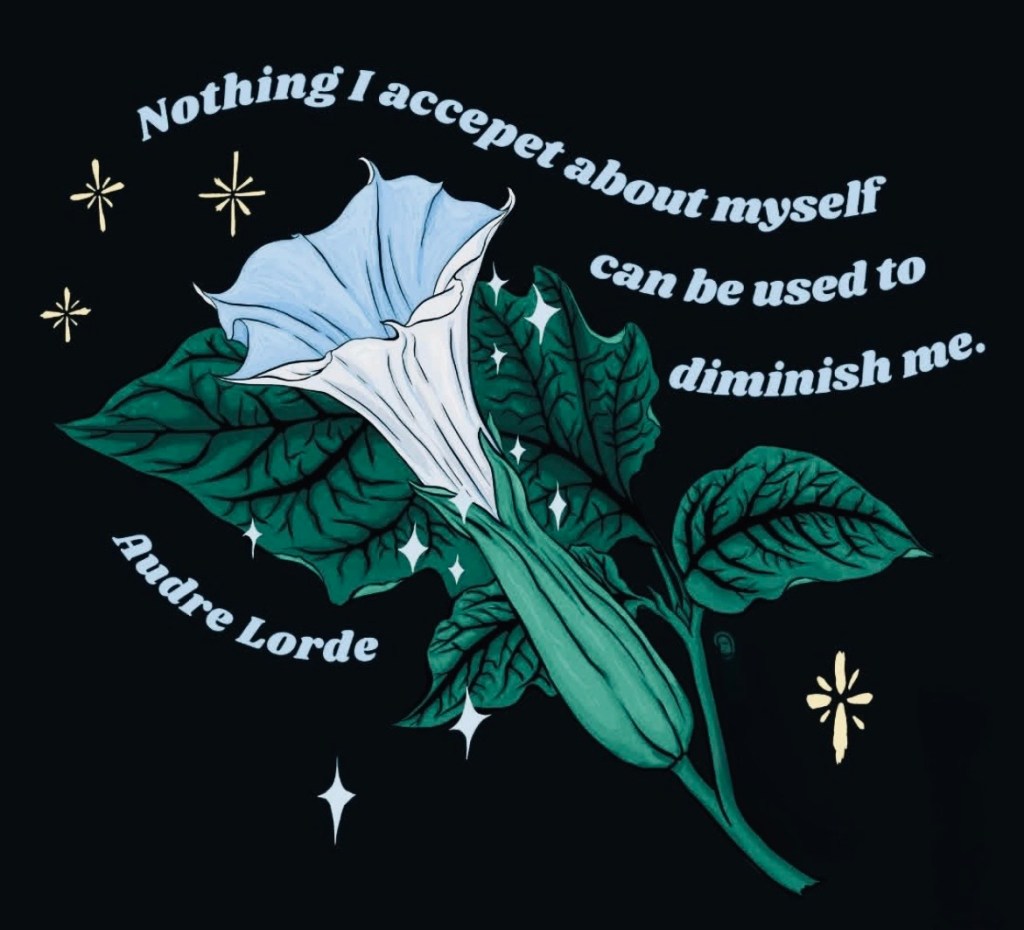
There are other tiers to my identity, less vital to me but still a part of who I am. I am working class. I am Gen X. I am a woman. I am a Mainer (but not a native, always from away, even after more than three decades here). I am sober. I am self employed. I am an Irish American, and come from a long line of New York Irish. I am a INFJ and a Leo. I am 45 (today, for the first time). I am solitary. But I feel some dissonance around all of these things. They are both real and relevant; but also ephemeral. Things I could loose track of, things I might sit next to me on a bench and walk away from forgetfully, things that sometimes feel like a performance, things that slip from between my fingers. Sometimes it feels like drag. Sometimes I think, it’s all a costume, none of this is real. But I do have a history, I do have an identity (or many identities, shifting and changing), there is a narrative here, if you’re looking for one. I have recreated myself many times. There are people who knew me at 15, or 25, or 35 who wouldn’t recognize much in me now. Who might not like much in me now.
There is a famous exchange between David Lynch and Harry Dean Stanton. David asks Harry how he would like to be remembered, and Harry answers, doesn’t matter. David asks him, how would you describe yourself, and Harry says, as nothing, there is no self. It’s some heady, delightful stuff. Some of the people I spoke to about identity focused on escaping identity, deconstructing, and striving for an egoless, non-identity. Which I would argue is its own form of identity, but sure. Big ideas. I wonder if I would want that, that freedom, that emptiness? When I have dabbled with meditation (and David and Harry were both big TM guys) I have felt the edge of something, something full of contradictions, some sense of being nothing, and everything; of being tiny and inconsequential, and immense; an explosion of light – blinding unto blackness that consumes. Getting to Artist and Human Being has been a process of stripping back; sitting many, many things down, aside, or straight up burning them to the ground. It feels right. Would I want to put those down? Could I? One of the paradoxes of reducing attachment is that attachment doesn’t only produce suffering, it also produces momentum. My art feels less like desire than devotion, and I’ve never regretted letting it be the engine of my life. Maybe when I die that choice will be made for me, then I can be nothing, no-one, and move beyond all the words, beyond form. But for now I will keep my feet on the ground, and drench myself in it, and practice, and seek, and bear witness, and be lighthearted when I can find my way to it.
I’ll be back soon with The Dark Half.
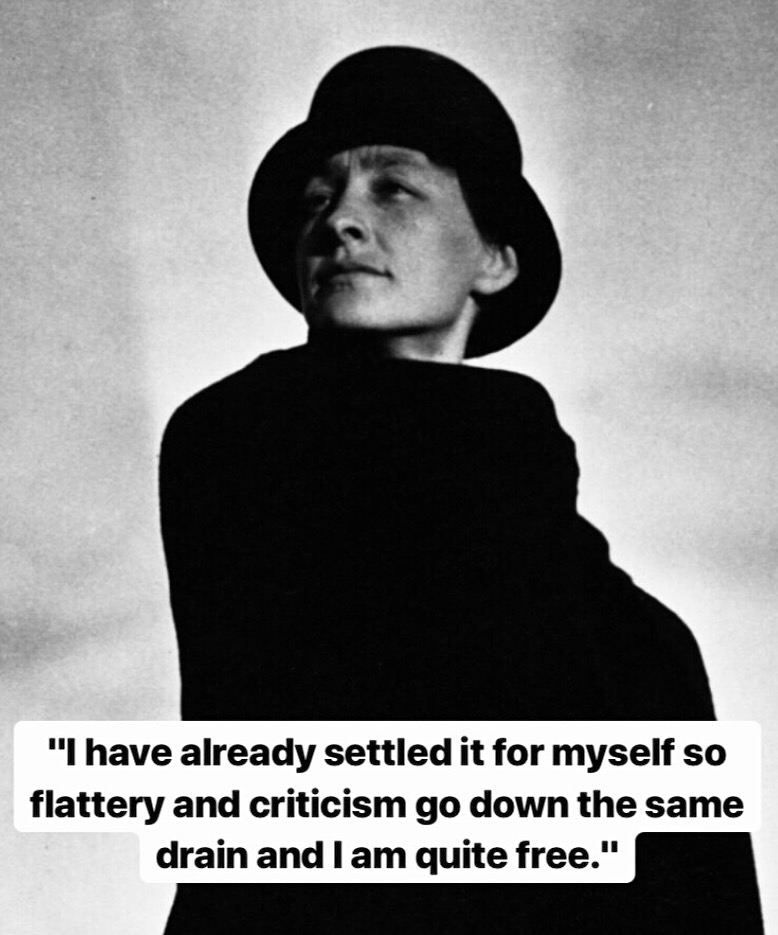
-Georgia O’Keefe

